
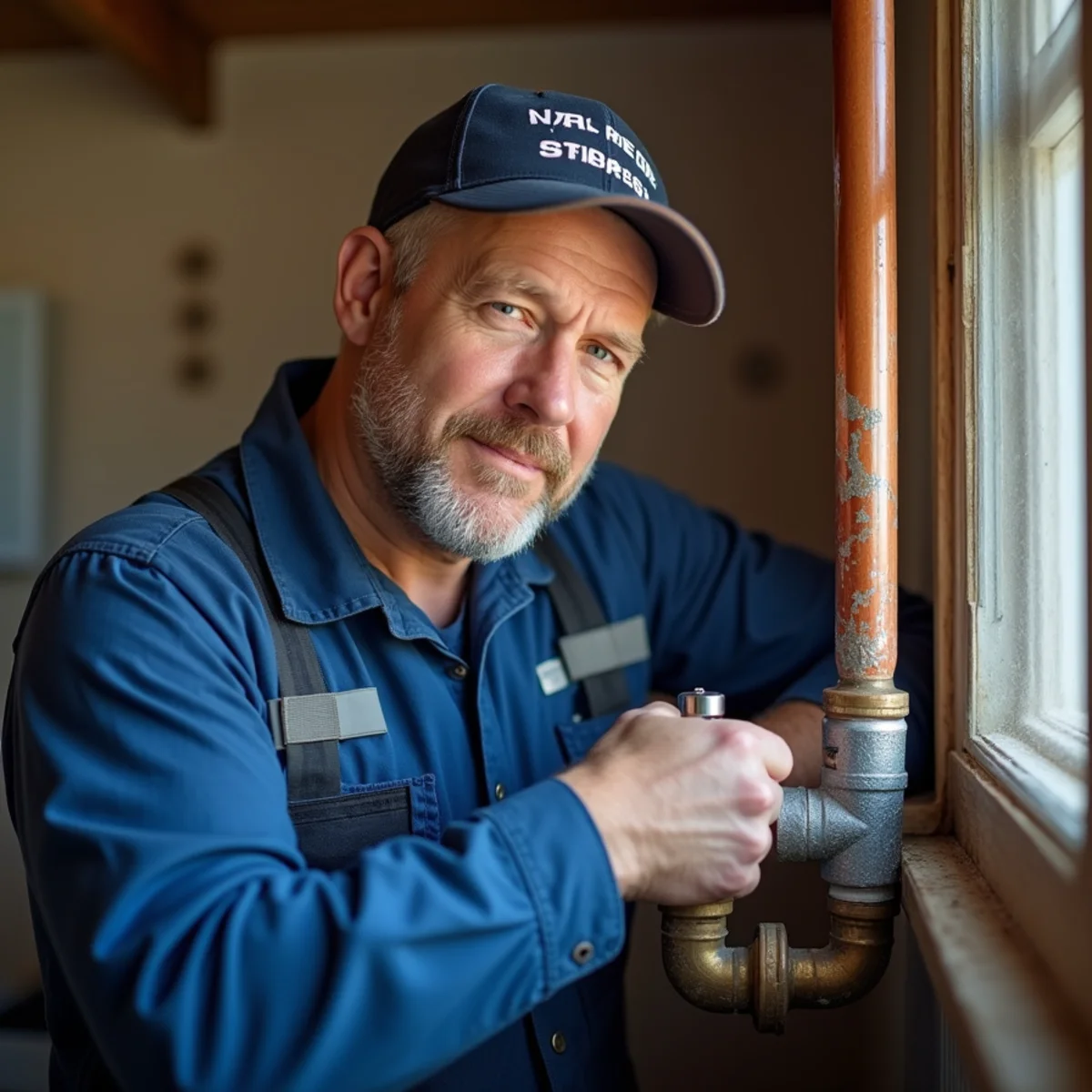
When dealing with frozen pipes in iowa: emergency steps before they burst, prompt action and strict adherence to Iowa plumbing standards are critical. Our licensed master plumbers recommend immediate isolation of active hazards, following code-compliant diagnostic steps, and scheduling a professional on-site evaluation before minor plumbing vulnerabilities escalate into structural property damage.
Understanding the Iowa Freeze Threat: Why Pipes Freeze
When an Arctic polar vortex rolls into Central Iowa, temperatures can hover at -10°F with wind chills exceeding -30°F for days. In this deep freeze, plumbing lines routed through exterior walls, cantilevered overhangs, unheated garages, and drafty crawlspaces lose heat rapidly. As water approaches 32°F, it crystallizes into ice and expands by 9% in volume.
Many homeowners assume that a frozen pipe is an automatic catastrophe, but if caught early, you can thaw the ice plug before hydrostatic pressure ruptures the pipe wall. Here is your step-by-step emergency protocol.
Signs Your Pipes Are Frozen
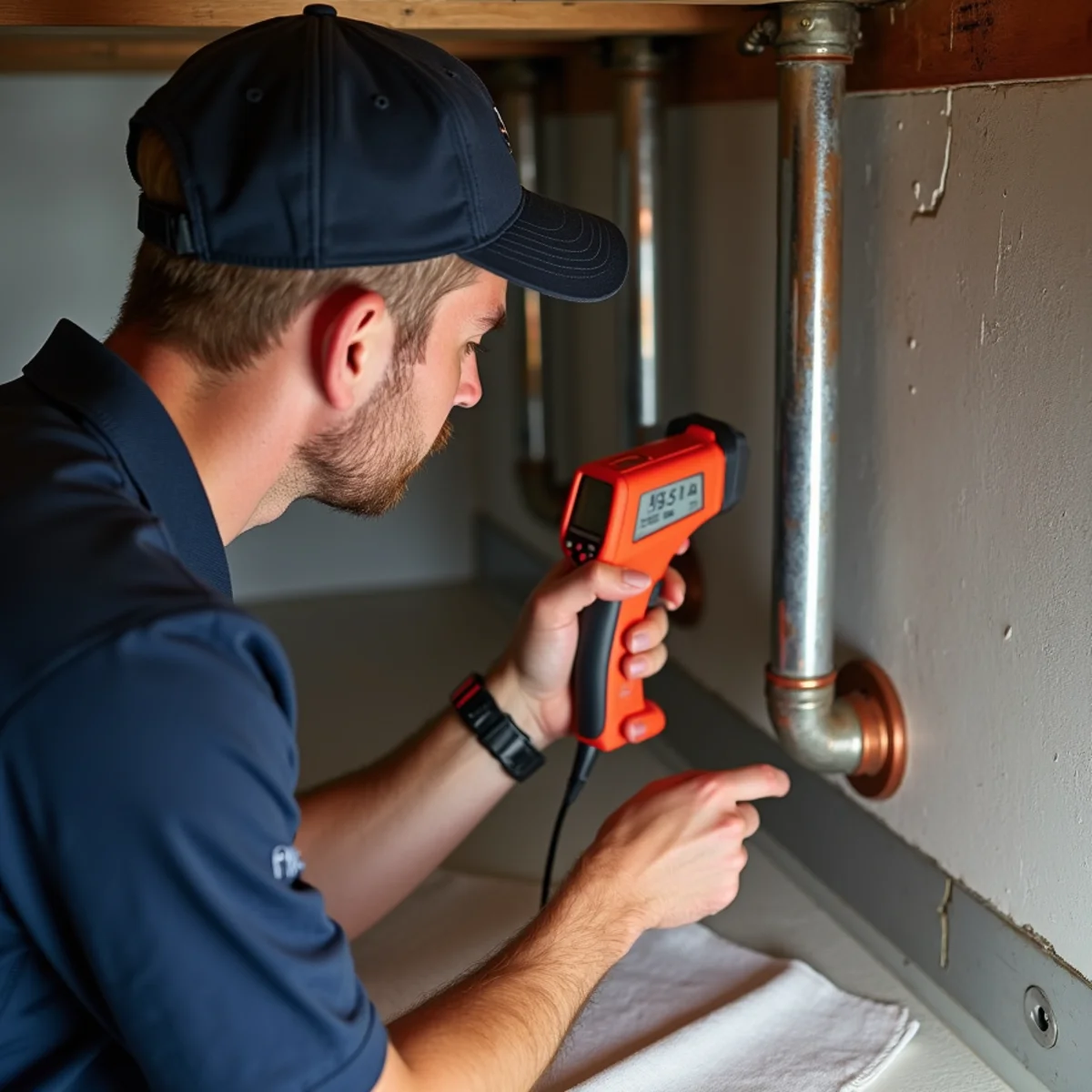
The most obvious indicator is turning on a faucet on a sub-zero morning and getting only a weak trickle or nothing at all. Other warning signs include visible frost along copper or PEX tubing, pipes that appear slightly bulged or egg-shaped, and unusual gurgling noises when running adjacent fixtures.
Check the plumbing lines under kitchen sinks positioned on exterior walls, master bathrooms situated above unheated garages, and outdoor hose bibb supplies along your basement rim joists first.
- Faucet turns on but produces zero flow or only a few drops
- Visible white frost or condensation coating the exterior of copper pipes
- Unusual odors rising from sink traps due to ice blocking normal vent lines
- Outdoor temperatures have dropped below 20°F with strong north winds
Safe Thawing Methods (And What NEVER to Do)
The golden rule of pipe thawing is: NEVER use an open flame, propane torch, or charcoal heater. Open flames ignite fiberglass insulation, wood framing, and paper vapor barriers within seconds, causing dozens of preventable house fires across Iowa every winter.
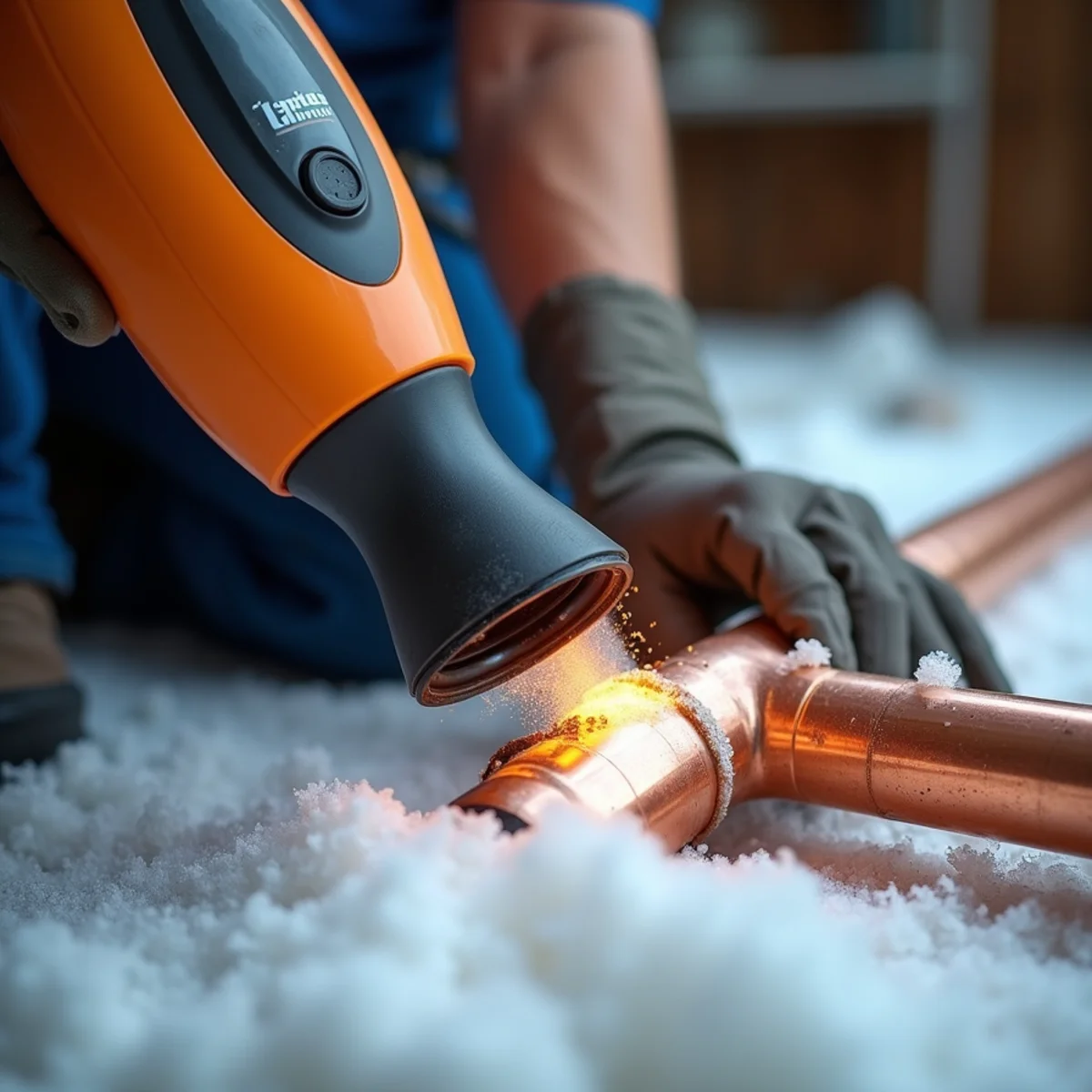
Instead, keep the affected faucet open so water can flow as soon as ice begins to melt. Start applying gentle heat using a standard hairdryer, an electric heating pad wrapped around the pipe, or space heaters positioned safely in the room. Always work from the faucet end backward toward the frozen blockage to give melting water an open exit path.
What to Do If the Pipe Has Already Split
If you discover a visible longitudinal crack in the pipe, do NOT attempt to thaw it yourself. The solid ice is currently acting as a plug holding back municipal water pressure. The second that ice melts, water will spray uncontrollably into your living space.
Shut off your main water valve immediately, place buckets beneath the damaged section, and call Plumbing Ankeny at (831) 290-4327 for rapid emergency service.

Master Plumber Diagnostic: Safe Pipe Thawing vs. Catastrophic Fire Risks
Why Open Torches Cause Severe Residential Structure Fires Every Winter
When sub-zero Arctic blasts sweep across Polk County, desperate homeowners often reach for propane blowtorches to thaw frozen copper lines quickly. Every winter, Iowa fire departments respond to devastating residential attic and basement fires directly caused by open-flame plumbing thawing.
Copper is an exceptional conductor of heat. Applying a 2,000°F flame to a copper line transfers ignition temperatures deep into unconditioned wall cavities, igniting dry wood framing, paper-backed fiberglass insulation, and spider webs out of sight. Furthermore, flash-heating a frozen pipe flashes trapped ice into high-pressure steam, causing the pipe to violently rupture in your face.
Our technicians employ controlled electrical thawing equipment, high-output industrial warm-air heat guns, and specialized infrared silicone heat blankets. We work methodically from the open faucet back toward the freeze point, allowing melting water to vent pressure continuously.
Iowa Frost Line Dynamics and Exterior Wall Insulation Retrofits
Understanding 42-Inch Soil Frost Depth and Rim Joist Draft Infiltration
In Central Iowa, municipal building codes require water service lines to be buried at least 5 feet below ground level because our frost depth regularly penetrates 42 inches into the soil during extended January polar vortexes. However, the vast majority of frozen pipes occur not underground, but along poorly insulated exterior rim joists and unheated overhang cantilevers.
In modern two-story construction, kitchen sink supply lines run through exterior wall cavities or floor cantilevers are vulnerable to negative-pressure draft currents. Sealing rim joist gaps with closed-cell polyurethane spray foam and rerouting water lines through heated interior partitions permanently eliminates winter freeze anxiety.
Central Iowa Building Codes & Master Plumber Standards Compliance
Plumbing work across Ankeny, Des Moines, and Polk County must comply strictly with the Iowa Uniform Plumbing Code (UPC) and local municipal amendments. Whether addressing emergency water leaks, replacing aging water heaters, or repairing subterranean sewer laterals, unpermitted work or DIY shortcuts can void homeowner insurance policies and create serious safety hazards including toxic sewer gas leaks and combustion backdrafting.
Plumbing Ankeny operates under Iowa Master Plumber License #0038924. Our certified technicians carry $2,000,000 in liability coverage, pull all required municipal permits, and coordinate required city trade inspections directly, ensuring your home remains safe, code-compliant, and protected for years to come.
Central Iowa Homeowner Action & Diagnostic Matrix
Stage 1: Hazard Mitigation
Shut off local fixture valves or the main building shut-off near the water meter. Turn off electrical circuit breakers if standing water is present.
Stage 2: Diagnostic Scoping
Deploy calibrated digital pressure gauges, fiber-optic sewer cameras, or acoustic leak detectors to verify root causes without unnecessary demolition.
Stage 3: Permanent Resolution
Execute permanent repairs using Type-L copper, ASTM F1960 PEX-a expansion, or CIPP epoxy liners backed by our 1-year parts and labor warranty.
Frequently Asked Questions
Can I use a hairdryer to thaw a frozen pipe?
Yes, a hairdryer or electric heating pad is safe for accessible, exposed pipes. Never use an open flame torch, which can ignite insulation or cause trapped steam explosions.
Should faucets be left open while thawing a frozen pipe?
Yes! Always open the faucet connected to the frozen pipe. As the ice melts, running water helps melt remaining ice and relieves dangerous pressure.
How long does it take for an interior frozen pipe to thaw naturally?
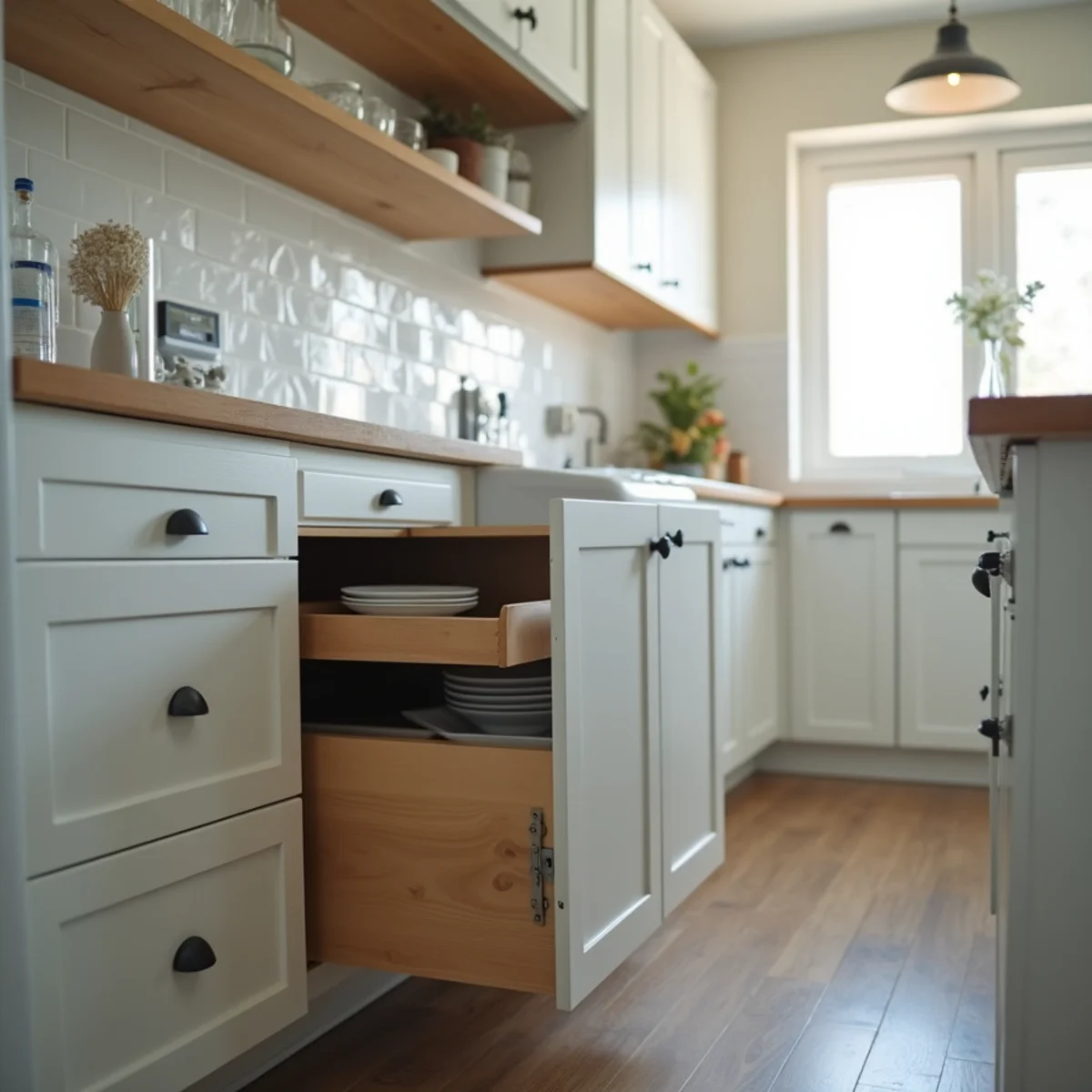
If you crank your thermostat to 72°F and open cabinet doors, an interior pipe may thaw in 2 to 6 hours. However, leaving it to thaw unmonitored is dangerous because existing splits will immediately start flooding your home the moment ice plugs dissolve.
What should I do if my hot water lines are frozen but cold water still runs?
This indicates the freeze has occurred in the dedicated hot water distribution manifold, an exterior uninsulated crawlspace line, or the water heater inlet/outlet piping. Keep the hot water taps open and call an emergency plumber immediately.
Why do frozen pipes burst while thawing rather than when freezing?
Pipes actually rupture during the freezing process as expanding ice creates trapped hydrostatic pressure between the ice blockage and the closed faucet. The fracture is only revealed during thawing when melting ice no longer acts as a solid plug against line pressure.